• Option To Restore To Original Three-Bedroom Layout
• Original Hardwood Timber Floors Recently Restored
• Extra Street Parking Permit Available
• High Ceilings & Original Character Details Througout
• Two Original Fireplaces
• Direct Access To Fawkner Park
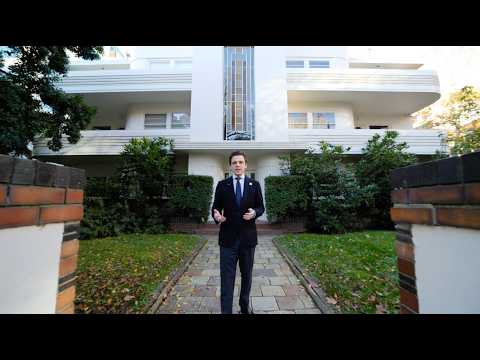
• Streamline Moderne, Late Art Deco Charm Built In 1936
• Leafy Communal Gardens Leading Into Fawkner Park
• Moments To Chapel Street, Toorak Road, And South Yarra Dining
Set within a beautifully maintained Art Deco building at one of Melbourne's most prestigious addresses, this generously proportioned two-bedroom apartment, originally configured as three, offers a rare combination of period character, functional space, and an unbeatable lifestyle position directly opposite Fawkner Park.
Dressed in warm timber floors, soaring ceilings with ornate cornice detail, and a series of striking white-painted brick fireplaces, the apartment carries an effortless elegance that newer buildings simply can't replicate. Light pours in from multiple aspects, filling both the living and dining rooms, each anchored by their own fireplace, with a warmth that makes this feel less like an apartment and more like a home.
The flexible floor plan presents the current layout as a generous two-bedroom configuration with a spacious living area, separate dining, walk-in robe, and well-appointed bathroom with laundry, or alternatively, the original three-bedroom layout for those seeking additional room or investment yield.
Step outside and Fawkner Park is right at your door, one of Melbourne's most beloved green spaces, perfect for morning walks, weekend sport, and the kind of everyday calm that's genuinely hard to find this close to the city.
The History of Kia Ora, 447-453 St Kilda Road
Origins and Ownership
The land that Kia Ora occupies, known as Crown Allotments 11 and 12, was originally developed with two villas around 1900 and 1923. In 1935, the site was purchased by Kia-Ora Investments Pty Ltd, an investment company owned by the Dixon family, who were behind the famous Kia-Ora and OT cordial brands. The family was already involved in property development across Melbourne and sought to create a modern, high-quality apartment complex on St Kilda Road.
Architect and Construction
Kia-Ora Investments engaged architect Lewis Levy, who was well known for designing luxury flats across Melbourne including Regent Court in South Yarra and The Astor on Beaconsfield Parade. Construction began in 1935 and was completed in 1936 at a total cost of around £80,000, which included the land. When completed, Kia Ora was the largest apartment complex in Melbourne, containing 60 residences spread across two symmetrical three-storey buildings connected at the rear.
Design and Features
Kia Ora was designed in the Streamline Moderne style, a later form of Art Deco that focused on clean lines, curved corners, and smooth surfaces. The U-shaped layout wrapped around a landscaped central courtyard, allowing natural light and airflow to reach every apartment. The building featured curved balconies, bi-chromatic brickwork in cream and chocolate tones, and vertical entrance towers with decorative leadlight windows. Each apartment was fitted with hydronic heating, walk-in wardrobes, and modern kitchens, which were considered luxury features at the time.
Early Residents and Management
The apartments were designed for Melbourne's professional and upper-middle-class tenants. Williams and Company managed the complex, promoting it through an extensive advertising campaign that included display suites furnished by Ackman's furniture stores. Tenants enjoyed free hot water and central heating, and rents ranged from £2 17s 6d to £3 17s 6d per week. John Dixon, founder of the Kia-Ora company, personally reviewed potential tenants and preferred long-term residents over short-stay renters.
Postwar Years and Alterations
By the 1950s, Kia Ora had become a landmark on St Kilda Road, with aerial photographs showing its size and prominence compared to nearby mansions and smaller flats. In 1959, photographer Wolfgang Sievers captured several well-known images of the building. During the 1970s, minor updates were made to the lighting, laundry facilities, and pathways, but the main structure and design remained intact.
Legacy
Today, Kia Ora remains a highly intact and important example of 1930s Streamline Moderne architecture in Melbourne. It represents the growth of elegant, medium-density apartment living during the interwar years and stands as a reminder of the Dixon family's contribution to both industry and architecture.
This property is proudly presented by Tommy-Lee Davies of Ray White Southbank | Melbourne City, a specialist within the Melbourne 3004 market. If you would like further information about this apartment, or need advice on buying or selling within the Kia Ora building or surrounding St Kilda Road and Queens Road precinct, please contact Tommy-Lee directly.


 ▶
▶


